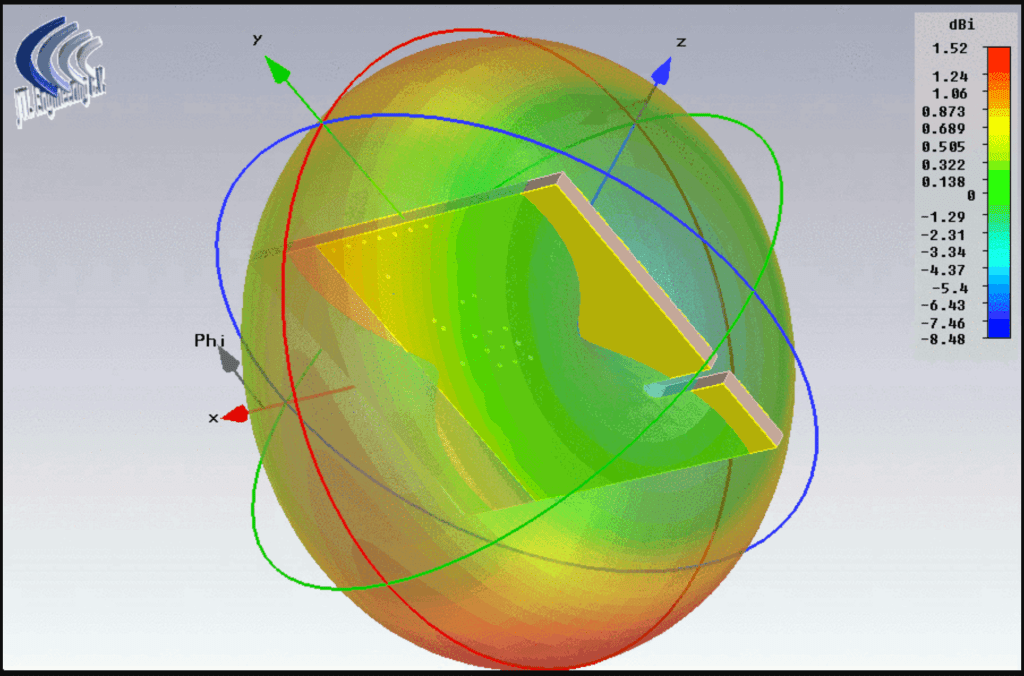
As a Product Manager building a wirelessly connected device, you may have experienced the satisfaction of passing FCC or ETSI certifications with flying colors, only to be confronted with the disappointment of receiving bad reviews due to suboptimal wireless performance from customers. Worry not; let’s explore how you can build great wireless products by understanding EIRP and TRP.
Effective Isotropic Radiated Power (EIRP) is an important wireless metric that measures, by a known reference antenna, the amount of RF energy radiated by your device’s antenna(s). EIRP is used by FCC and ETSI regulators to certify that the device conforms to set radiation limits. While it sounds simple enough, the devil is in the details.
An ideal antenna radiates in 3 dimensional space and has a donut like radiation pattern. Check out this awesome animation 👇. Note the direction of rotation by grey arrows denoted by ‘Theta (𝜃)’ and ‘Phi (𝜑)’
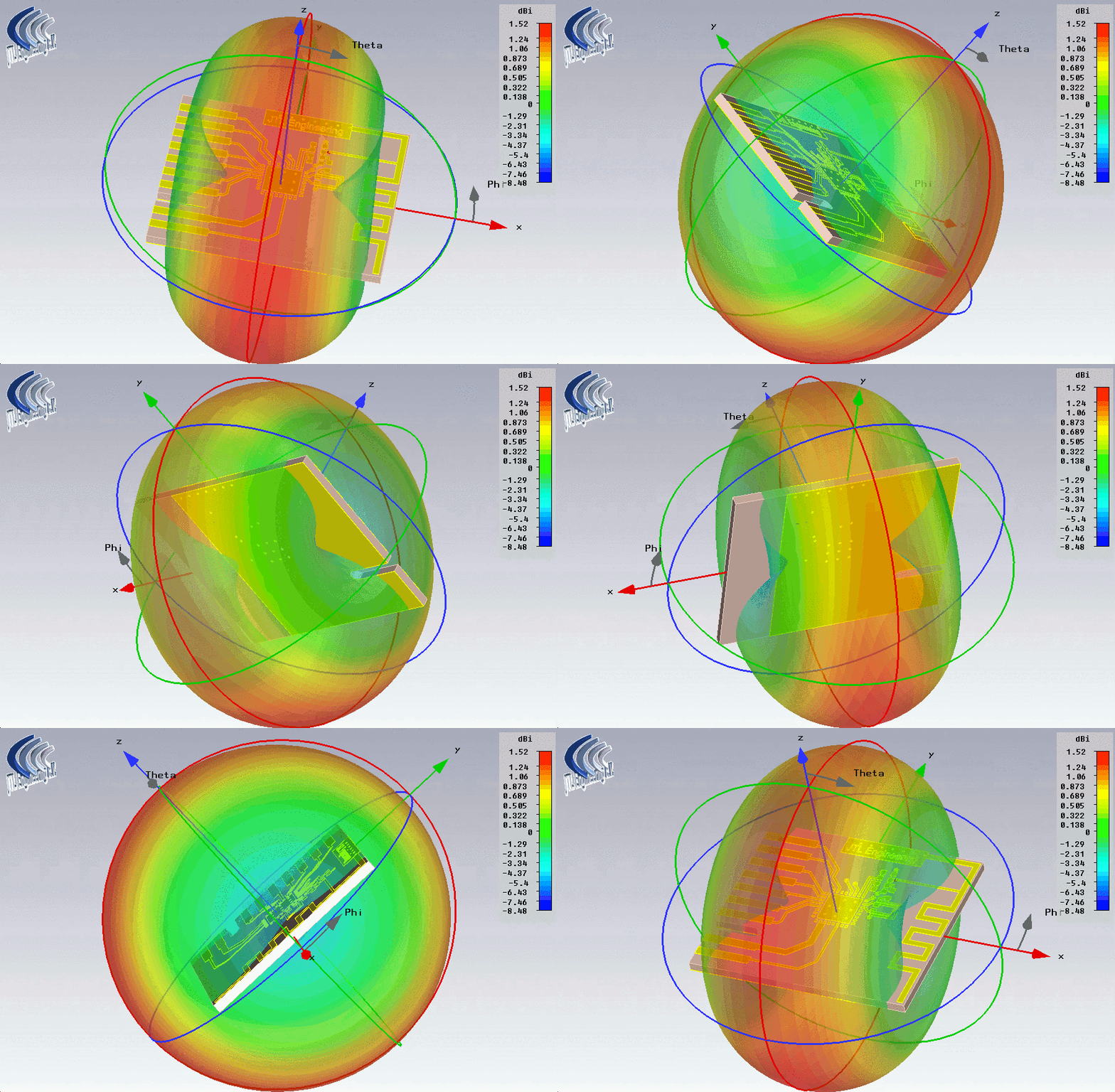
Reference:https://jtl-engineering.com/antenna.html
Additonally, the polarisation of the antenna also plays a role in the the EIRP measurement . Found this great visualisation of Horizontal polarisation, i.e E field is parallel to Earth on Google search (waiting for ChatGPT to throw out multimodal 🙂 results ).
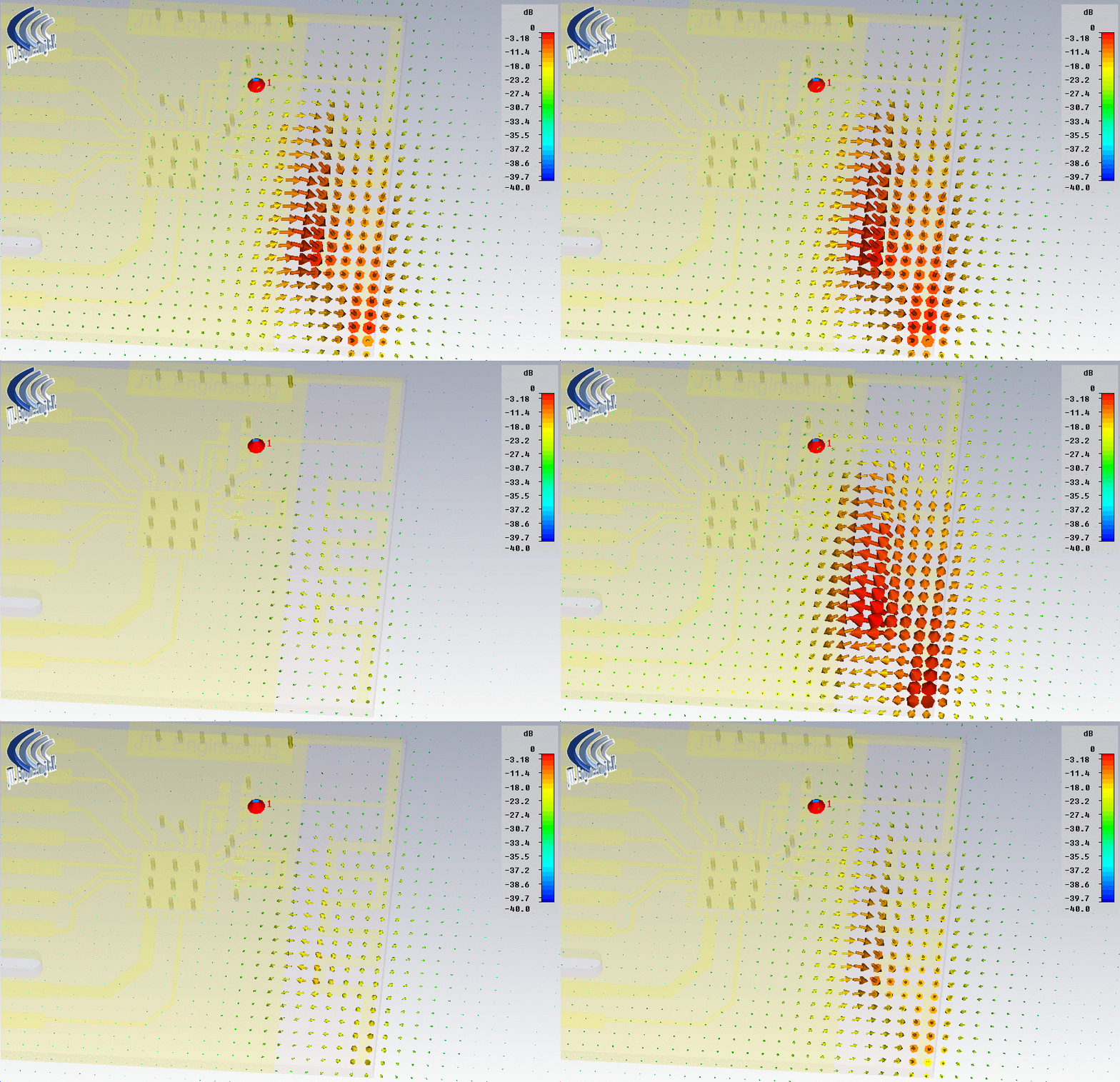
Reference: https://jtl-engineering.com/antenna.html
So, depending on your antenna’s orientation and polarisation, EIRP can significantly vary. Regulators are not concerned with how good a ‘donut’-like radiation pattern your device creates; they simply don’t want your device to be a bad neighbour, i.e., exceed the set EIRP limit.
Regulators check EIRP by taking the maximum of the EIRP measured in horizontal and vertical polarisation.
EIRP (𝜃, 𝜑) (dBm)= max [EIRP (𝜃, 𝜑) (H), EIRP (𝜃, 𝜑)(V)]
Your OEM vendor can easily lower the power fed into the antenna to achieve EIRP certification.
When you want to measure the true performance of your wireless system, consider looking at the Total Radiated Power (TRP). It is the sum total of the EIRP measured at different orientations of the antenna, given by the formula 👇.

Reference: https://www.antenna-theory.com/definitions/trp.php
Basically it an integral or summation( in discrete terms) of radiated power from all possible directions, taking into account the dips in your antenna’s radiation pattern.
Now, you have a single value metric to judge the performance of your wireless system. Your wireless system’s design goal should be to bring TRP as close as possible to your regulatory body’s maximum EIRP limit. A too low TRP indicates that your device’s antenna pattern has lots of nulls or is transmitting at lower power, prompting a conversation with your ODM vendor
Would you rather leave this ‘black magic’ to RF experts? – Contact us and lets us have a chat on how we can help you build your next great wireless product.

 Sarodeoverwireless Consulting
Leave a comment