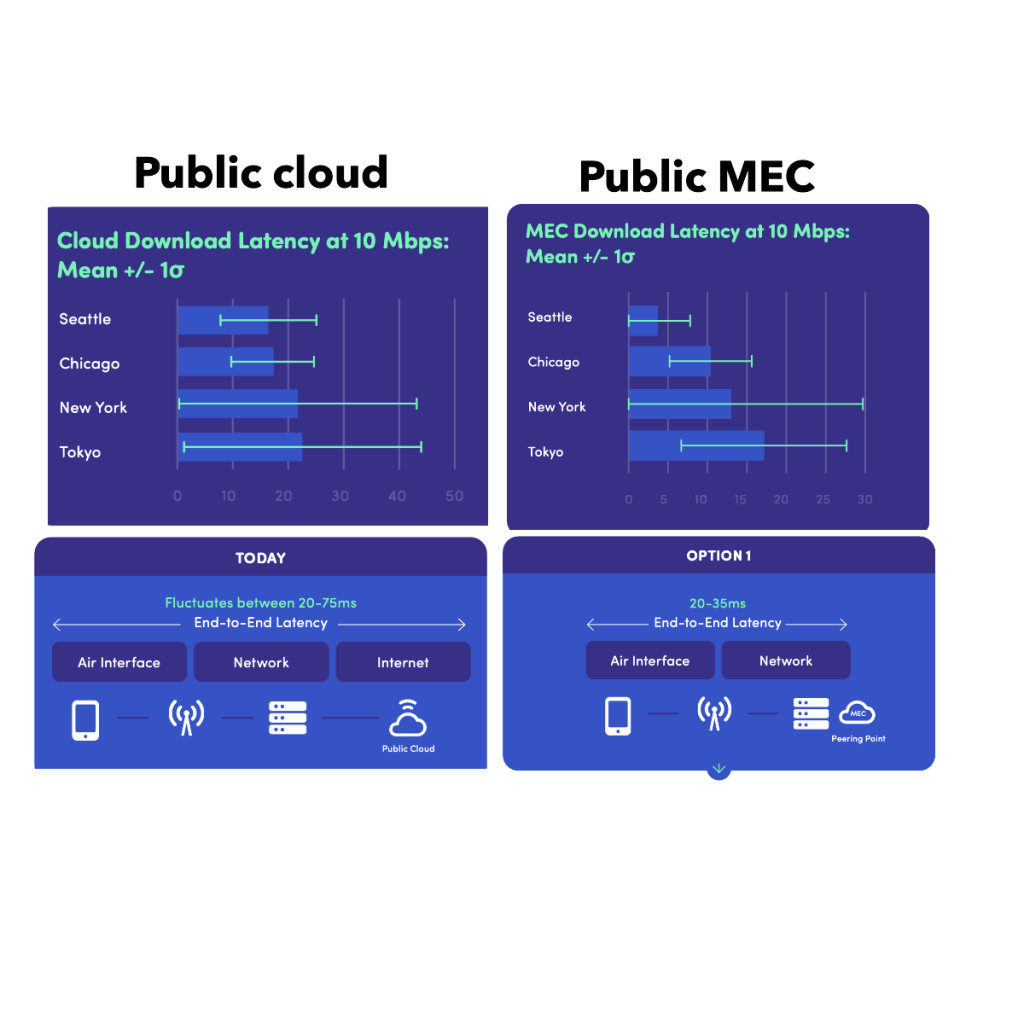
Multi Access Edge compute (MEC) reduces network latency by bringing cloud computing and 5G network operations closer to the RAN. It is meant to support 5G’s ultra reliable and low latency (URLLC) use cases, but tests results show otherwise.
Tests from Spirent Communications show that the mean latency does reduce with a public MEC but the variability is (P99) is still high because of
• 5G non-standalone (NSA) implementations with dependency on 4G networks have additional latency overhead.
• Air interfaces can pose challenges, especially during scheduling and handovers.
• Bufferbloat : wired transport networks used for front haul and backhaul are not always optimised for routing efficiency
• Applications themselves can insert latency due to processing overheads.
Read the whitepaper below

 Sarodeoverwireless Consulting
Leave a comment